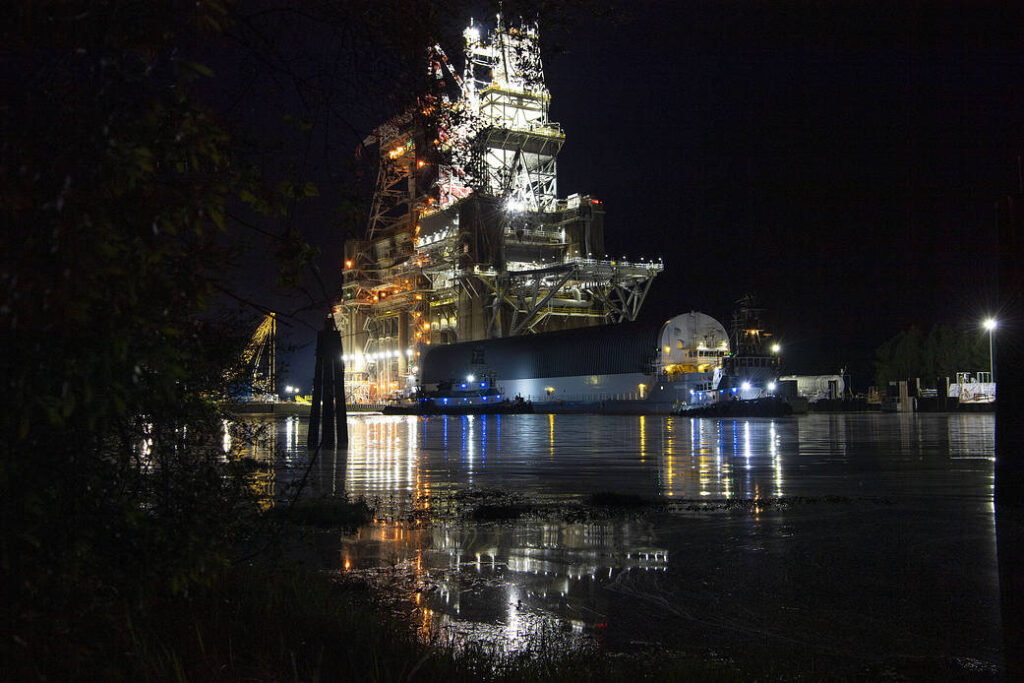
The first core stage of NASA’s SLS rocket departed Stennis Space Center following completion of the Green Run series of tests of its design and systems.
The stage now is in route to the agency’s Kennedy Space Center in Florida, its final stop prior to NASA’s launch of the Artemis I mission around the Moon.
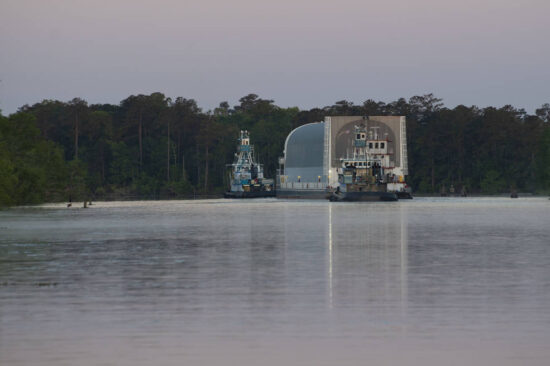
At Kennedy, the core stage will be integrated with the rest of the SLS rocket and the Orion spacecraft in preparation for launch. Through the Artemis program, NASA will return humans, including the first woman and first person of color, to the Moon and prepare for eventual journeys to Mars. NASA is building SLS as the world’s most powerful rocket to serve as the backbone of the Artemis program and the nation’s future deep space exploration missions.
The SLS core stage, measuring 212 feet tall and 27.6 feet in diameter, is the tallest flight component ever built by NASA. It is equipped with four RS-25 engines to help power the SLS rocket at launch. After an initial hot fire test of the engines experienced an automatic shutdown early this year, teams conducted a second test on March 18, characterized by agency spokespersons as “flawless.” During the test, the engines fired for more than eight minutes, generating a combined 1.6 million pounds of thrust and representing the most powerful test conducted at Stennis in more than 40 years. The test team then worked to refurbish the stage for launch and to remove it from the B-2 Test Stand, a precise operation that requires optimal weather and wind conditions.