This morning’s scheduled blast off of NASA’s new moon rocket remained on track as of late last night despite a series of lightning strikes at the launch pad.
The 322-foot (98-meter) Space Launch System rocket is the most powerful ever built by NASA. It’s poised to send an empty crew capsule into lunar orbit, a half-century after NASA’s Apollo program, which landed 12 astronauts on the moon.
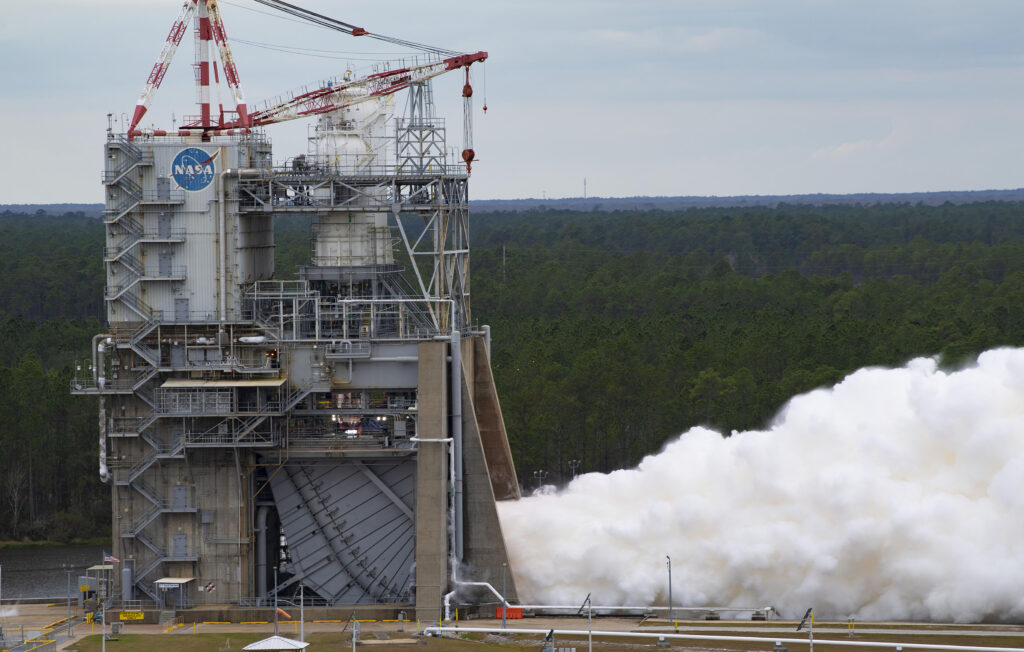
The rockets for this flight were tested at Stennis Space Center in Bay St Louis.
Astronauts could return to the moon in a few years, if this six-week test flight goes well. NASA officials caution, however, that the risks are high and the flight could be cut short.
In lieu of astronauts, three test dummies are strapped into the Orion capsule to measure vibration, acceleration and radiation, one of the biggest hazards to humans in deep space. The capsule alone has more than 1,000 sensors.
The Artemis flight, which could happen as early as 2024, would see four astronauts flying around the moon. A landing could follow in 2025. NASA is targeting the moon’s unexplored south pole, where permanently shadowed craters are believed to hold ice.