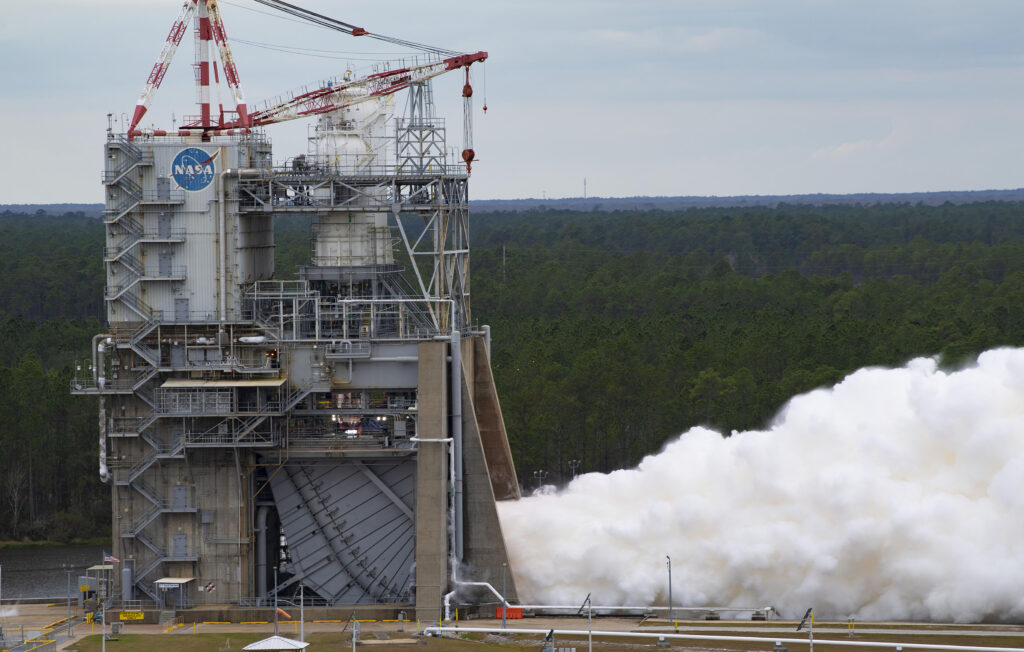
Yesterday NASA conducted its first RS-25 engine hot fire test of the new year at Stennis Space Center near Bay St. Louis.
The test was the second hot fire in the latest series that began in mid-December.
Each test in the series is providing valuable operational data to NASA’s lead contractor, Aerojet Rocketdyne, on a variety of new engine components as the company begins production of new RS-25 engines. These engines will help power the agency’s Space Launch System (SLS) rocket on future deep-space missions.
During launch, four RS-25 engines will power the SLS, generating a combined 2 million pounds of thrust during ascent.
The RS-25 engines for the first four SLS flights are upgraded space shuttle main engines and have completed certification testing. NASA will use the data from this test to enhance production of new RS-25 engines and components for use on subsequent SLS missions.
For the Jan. 19 test, engineers fired the RS-25 developmental engine at power levels ranging from 80 percent to 111 percent for a full duration of about eight-and-a-half minutes (500 seconds), the same amount of time the engines must fire to help propel SLS to orbit.