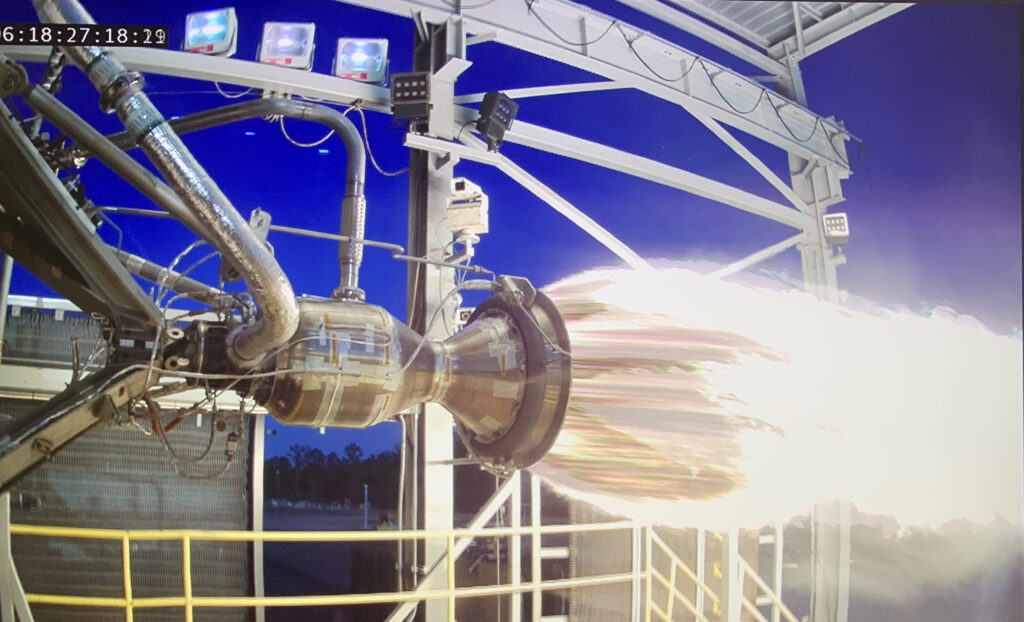
When Virgin Orbit, a satellite-launch company based in California, sought to expand its horizons, it was only natural for the company to think about NASA’s largest rocket engine test site, Stennis Space Center near Bay St. Louis.
With an established, positive reputation, and a 55-year track record in propulsion testing, Stennis Space Center offered a unique set of benefits, including test stands that can simulate an entire rocket engine, which allows their partners to test single components rather than shipping an entire engine on site.
Virgin Orbit secured a partnership with Stennis to reimburse the center for any testing costs, and, as a result, they were given the opportunity to utilize Stennis’ experience and expertise, allowing them to avoid building their own testing facilities while gaining valuable hands-on experience.
The Virgin Orbit’s test campaign had team members focused on the 75,000-pound force Thrust Chamber Assembly (TCA), which consists of an injector, combustion chamber, and nozzle. The TCA is not an entire engine. Instead, it is where the propellants are mixed, combusted, and exhausted. The objective is to test different propellant injector configurations to determine which configuration will maximize performance and efficiency.
The testing at Stennis directly contributed to the design changes appearing on the Newton 3 engine – a first stage engine that uses Rocket Propellent-1 and liquid oxygen as propellants. Virgin Orbit uses Newton 3 to propel the LauncherOne rocket, a two-stage, orbital, air-launched vehicle carried to the upper atmosphere and released over the Pacific Ocean.
This rocket holds the title of the first orbital class, air-launched, liquid-fueled rocket to successfully reach space.